How Often Should I Clean My Shingled Roof? A Comprehensive Guide
When it comes to maintaining a pristine home exterior, understanding the ideal timing for roof maintenance can be as crucial as the method itself. “How often should I clean my shingled roof?” is more than just a question—it’s a key part of preserving the integrity, safety, and appearance of your home.
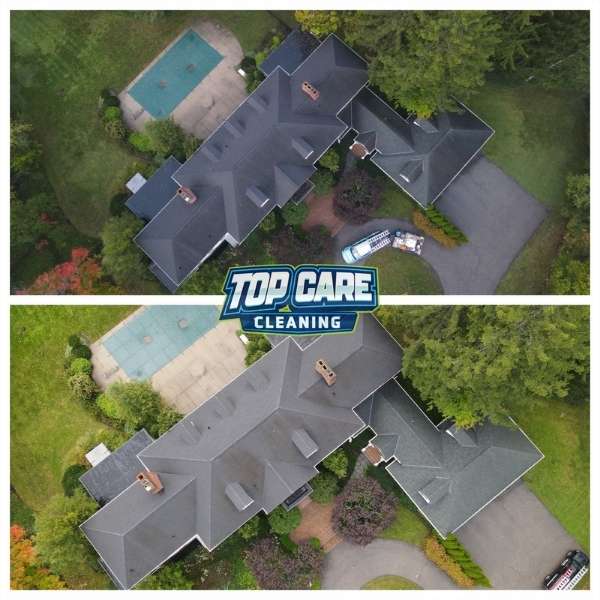
In this guide, we’ll explore how often you should clean your shingled roof, how climate and surroundings affect your schedule, and when it makes sense to bring in a professional soft‑wash roof cleaning company. Along the way, we’ll point you to additional resources from Top Care Cleaning so you can dive deeper into specific roof and exterior cleaning topics.
The Essentials of Roof Cleaning: Importance and Timing
Maintaining the cleanliness of your shingled roof is not merely a cosmetic concern—it’s a vital aspect of home care that impacts the longevity of your roof and the overall value of your property. Neglect can lead to a buildup of moss, algae, lichen, and debris, which can shorten the life of your shingles and increase the risk of leaks and structural issues.
Why Clean Your Roof?
- Prevents damage: Moss and algae hold moisture against the roof surface, which can break down shingle materials and lead to rot, lifted shingles, and leaks. Top Care explains how moss growth develops and why it’s more than just an eyesore in their article on why there is moss growing on your roof.
- Saves money: Routine, gentle roof cleaning can delay the need for costly repairs or even a full roof replacement. In their guide on how often you should have your roof cleaned, Top Care highlights how strategic maintenance protects your investment.
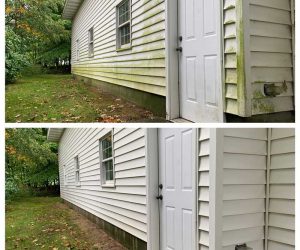
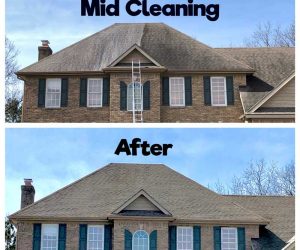
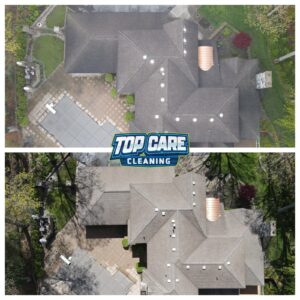
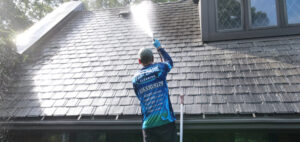
- Enhances appearance: Black streaks from algae and green patches from moss can make an otherwise solid roof look old and neglected. Professional roof cleaning, especially a non‑pressure soft wash, restores curb appeal and can be paired with house washing for a full exterior refresh.
When to Clean Your Roof
Instead of waiting for major staining or growth, it’s better to think in terms of regular inspections and planned cleanings.
- Spring and fall: These are ideal seasons to assess your roof, clear debris, and schedule cleanings as needed. After winter, you may find leftover debris and moisture‑related growth; in fall, you’re removing leaves and preparing for snow.
- Visible signs: Look for dark streaks (algae), green or fuzzy patches (moss), and an accumulation of leaves and twigs—especially in shaded or north‑facing areas. Top Care’s article on signs it’s time to clean is aimed at gutters but the same “look for visible buildup” principle applies to your roof.
For many asphalt shingle roofs in typical conditions, a cleaning every 1–3 years is a good baseline, with annual inspections to decide whether a full soft wash is needed that season.
Climate Considerations and Cleaning Frequency
The frequency of roof cleaning is significantly influenced by your local climate and surroundings. Two homes with the same shingles can have very different needs depending on tree cover, shade, and humidity.
Humid and Shaded Environments
In humid climates or heavily shaded lots, roofs are more susceptible to algae and moss growth. Overhanging trees keep roof surfaces damp longer and drop organic debris that feeds growth.
- Annual inspections and cleanings every 1–2 years are common in these settings.
- If you see recurring moss, you may need more frequent spot treatments from a professional soft‑wash service like Top Care’s moss removal and roof cleaning.
Dry and Arid Areas
In drier climates, roofs tend to grow less moss and algae, but dust and grit can still accumulate.
- You may only need a full cleaning every 3–5 years, with periodic debris removal and inspections.
- Focus more on checking after windstorms or dust events and keeping gutters clear; Top Care’s guides on the best time to clean gutters and how clean gutters prevent water damage show how roof and gutter care go hand in hand.
Coastal and Snowy Regions
Coastal homes deal with salt, and cold‑weather homes deal with snow and ice.
- Coastal areas: Salt can gradually affect roofing materials, so semi‑annual inspections and cleanings every 1–3 years are common.
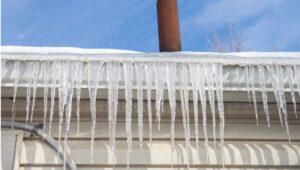
- Snowy climates: Ice dams and trapped moisture can accelerate growth and damage, especially if gutters are clogged. Top Care’s articles on cleaning gutters before winter and winter gutter cleaning explain how roof and gutter maintenance work together in cold weather.
Adjust your schedule based on these factors: more shade and moisture usually mean more frequent cleaning and closer monitoring.
How Often Should You Clean? Practical Rules of Thumb
While there is no one‑size‑fits‑all answer, several practical guidelines can help you tailor a schedule.
- Asphalt shingle roofs: Inspect yearly; plan to clean every 1–3 years, or sooner if you see visible growth.
- Heavily shaded / high‑growth areas: Expect closer to annual cleaning; soft washing is preferred to avoid wear.
- Light shade / moderate climate: Many homeowners can clean every 2–3 years with regular inspections.
Top Care’s article on how often you should have your roof cleaned goes into these ranges in more detail and explains how to adapt them to your home.
DIY vs. Professional Roof Cleaning
Deciding whether to clean your roof yourself or hire professionals depends on safety, cost, and the extent of cleaning needed.
DIY Roof Cleaning
Pros
- Lower direct cost for minor maintenance.
- Simple tasks like clearing loose branches or rinsing small areas can be manageable for some homeowners.
Cons
- Safety risks from ladders, steep slopes, and slippery growth.
- Using the wrong cleaner or too much pressure can strip shingle granules and void warranties.
DIY is generally best reserved for light maintenance, such as knocking down small debris, or checking gutters and downspouts. For anything involving moss, algae, or a full‑roof treatment, Top Care’s guide on what to look for in a professional roof cleaning service is a good starting point.
Hiring Professionals
A professional soft‑wash roof cleaning service brings the right equipment, training, and safety precautions.
Advantages
- Use of manufacturer‑recommended soft‑wash methods that clean without damaging shingles.
- Ability to safely remove moss, algae, and stubborn stains using commercial‑grade solutions and proper plant protection.
- Trained technicians who recognize early signs of roof, gutter, or exterior issues while they work.
Top Care’s article on 5 reasons to have a professional soft‑wash your roof walks through the benefits in depth, including curb appeal, preventing pests, and extending roof life.
Step‑by‑Step Cleaning Overview for Shingled Roofs
A well‑maintained shingled roof not only lasts longer, it also sets the tone for your home’s overall look. While the exact process can vary, a professional soft‑wash typically includes:
Preparation and Safety
- Assessing roof pitch, condition, and access points.
- Using proper ladders, non‑slip footwear, and sometimes safety harnesses where appropriate.
- Protecting nearby landscaping and rinsing plants before and after treatment when cleaning solutions are used.
Cleaning Process
- Debris removal: Clearing branches, leaves, and other loose material that traps moisture and hides growth.
- Applying cleaning solution: Using a low‑pressure soft‑wash system with a roof‑safe solution designed to kill algae and moss without damaging shingles.
- Gentle rinsing: Rinsing with controlled, low pressure to remove dead growth and residue without stripping granules.
- Spot treatment: Addressing any persistent patches of moss or lichen with additional soft‑wash treatments rather than aggressive scrubbing or high pressure.
Top Care emphasizes non‑pressure methods in multiple resources because traditional high‑pressure washing can severely damage shingles.
Aftercare and Inspection
- Checking for missing or damaged shingles, loose flashing, or drainage issues that need follow‑up from a roofer.
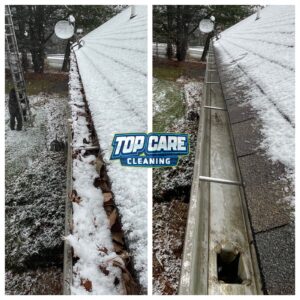
- Verifying that gutters are clear so newly freed debris doesn’t clog them; their articles on gutter cleaning best practices and why clean gutters before winter highlight the connection between roofs and gutters.
Preventative Strategies and Cost–Benefit Analysis
Preventative measures can significantly reduce how often you need a full roof cleaning and can keep each cleaning gentler and less intensive.
Preventative Measures
- Trim overhanging branches: Less shade and leaf litter means fewer damp, moss‑friendly areas.
- Improve roof and attic ventilation: Proper airflow helps roof surfaces dry faster after rain and snow, reducing algae and moss growth.
- Install zinc or copper strips: As rainwater runs across these metals, it creates an environment that naturally inhibits growth on the shingles below.
- Keep gutters clean: Backed‑up gutters trap moisture along the roof edge; Top Care’s resources on clogged gutters and how clean gutters prevent water damage show how this impacts your roof as well.
Cost–Benefit Perspective
- Short‑term costs: A professional roof cleaning or moss removal visit is an investment, but it’s far less than premature roof replacement.
- Long‑term benefits: Regular maintenance extends roof life, helps prevent leaks and structural damage, and keeps your home looking fresh—valuable if you plan to sell.
Top Care’s posts on choosing a professional roof cleaning company and what to look for in a roof cleaning service can also help you compare options and understand pricing.
Common Questions About Roof Cleaning
Q: Can I pressure wash my shingled roof?
A: High‑pressure washing is not recommended on shingled roofs because it can strip protective granules and shorten the roof’s life. Top Care strongly advocates soft‑wash, non‑pressure methods for asphalt shingles.
Q: How often should I inspect my roof?
A: Inspect at least twice a year—typically in spring and fall—and after major storms. During these checks, look for staining, moss, missing shingles, and gutter problems.
Q: Will cleaning my roof really extend its life?
A: Yes. Removing harmful growths and debris helps prevent moisture damage, shingle deterioration, and premature aging. Top Care’s resources on soft‑washing benefits and moss removal explain how regular, gentle cleaning protects roofing materials.
Regular cleaning and maintenance of your shingled roof are essential for protecting your home. By understanding the right timing for your climate, choosing safe soft‑wash methods, and implementing preventative steps, you can keep your roof in excellent condition for many years. For homeowners in the Grand Rapids area, Top Care Cleaning’s roof and exterior cleaning services offer a professional, low‑risk way to put those best practices into action.
Would you like this article tailored with specific local references (e.g., Grand Rapids, Hudsonville, Jenison) to match your main roof cleaning service areas?